Recurring vulnerability scans
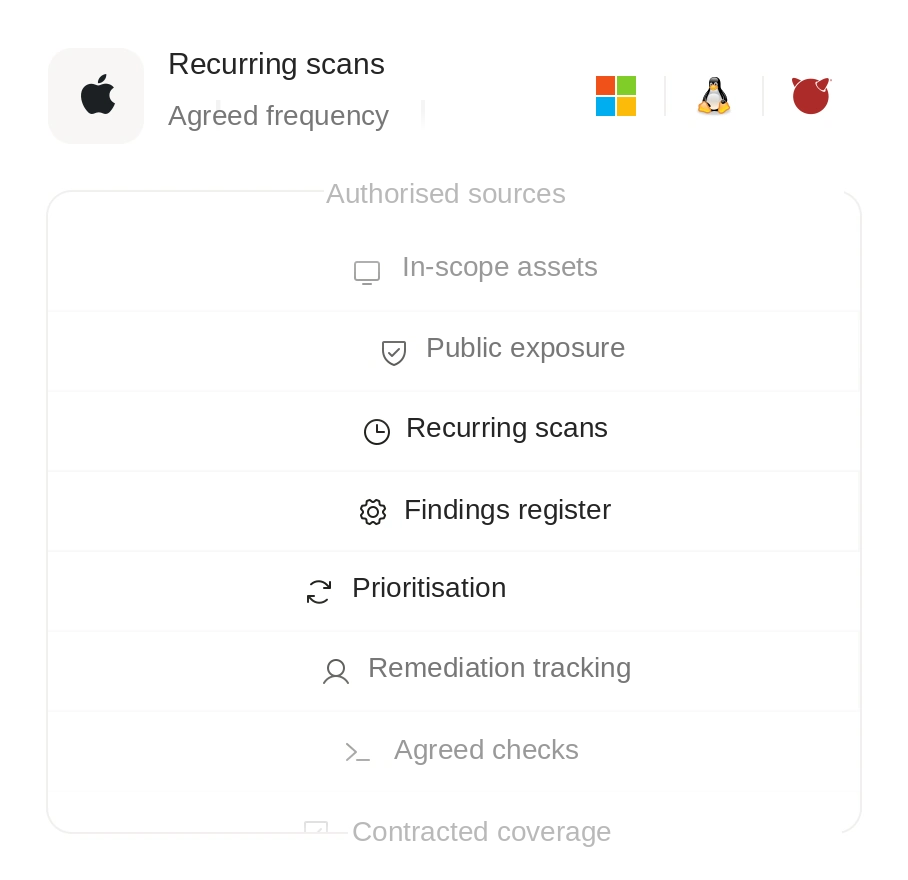
Authorised recurring scans at agreed intervals and scope. Findings feed the vulnerability register.

ZebraByte service access
Choose the service you want to manage.
Authorised recurring scans, a vulnerability register, public exposure monitoring and remediation tracking according to the selected package.
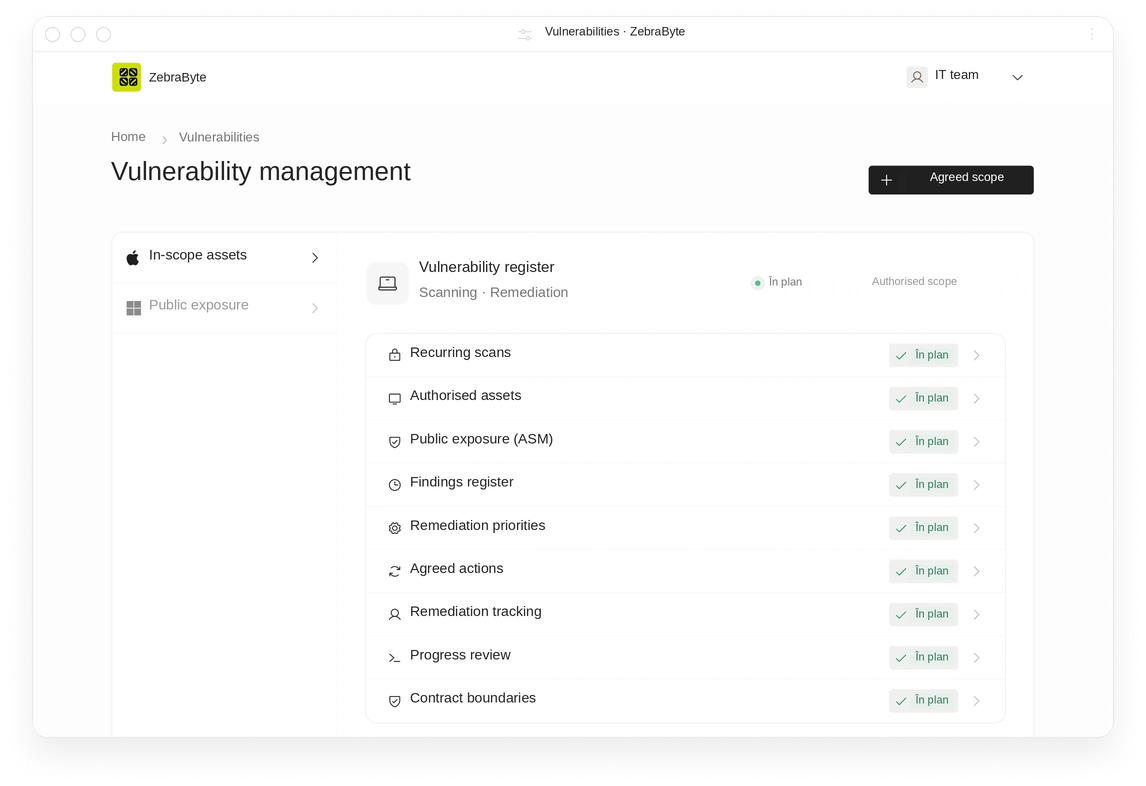
Scanning and remediation tracking within agreed scope.
Authorised scans at the agreed frequency.
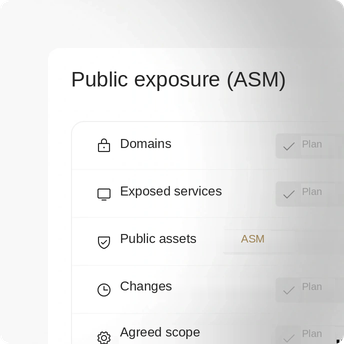
ASM monitoring within the enabled service scope.
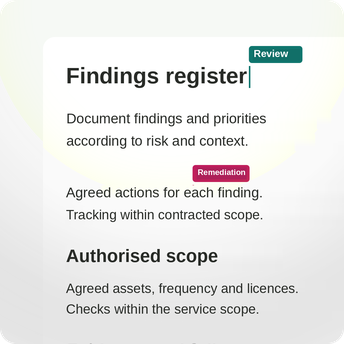
Consolidate findings and agreed actions.
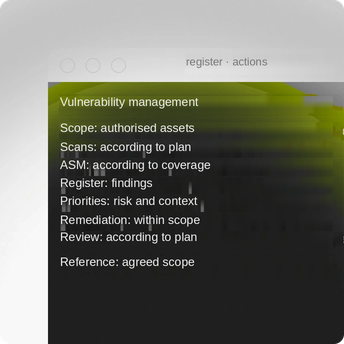
Prioritise findings according to risk and context.
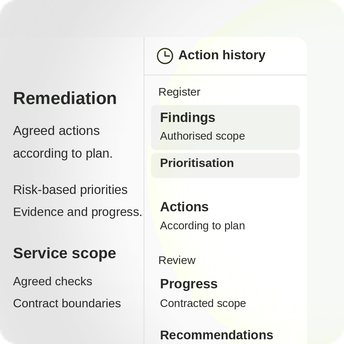
Track actions within the contracted scope.
Agree scope, prioritise findings and track remediation.
Recurring discovery and documented actions, according to package.
Authorised recurring scans at agreed intervals and scope. Findings feed the vulnerability register.
Coverage depends on agreed assets, sources and licences.
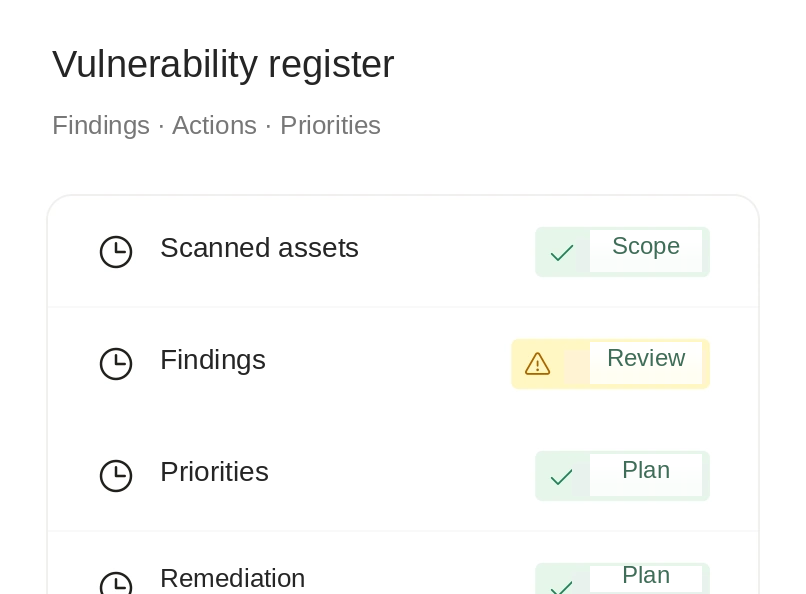
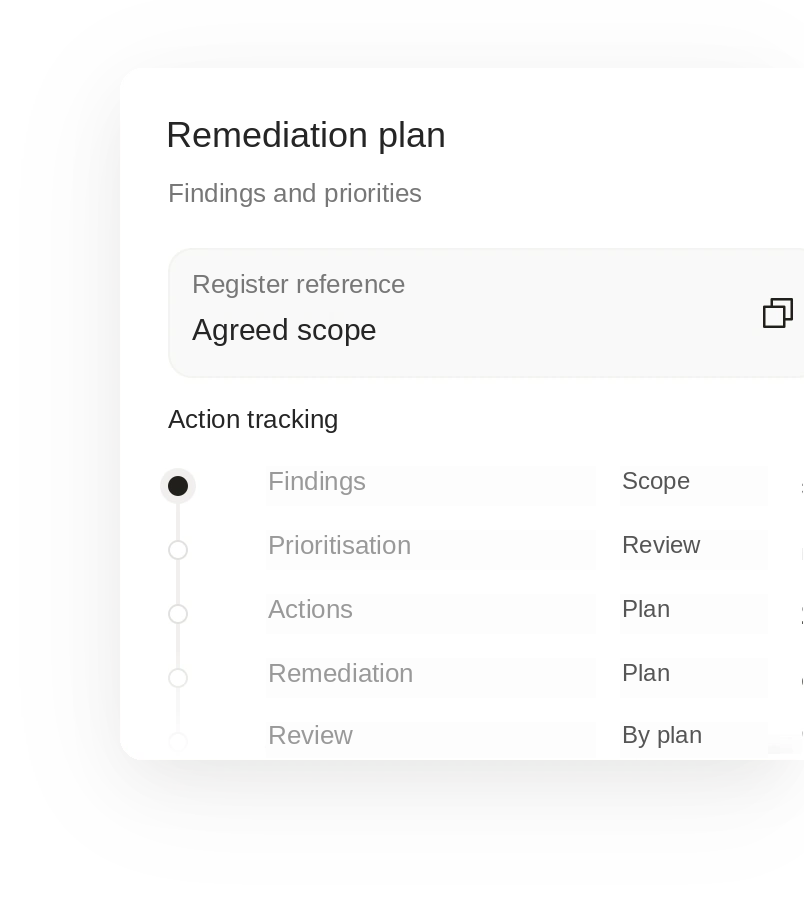
The register brings together findings, priorities and agreed actions to track progress.
Track remediation progress within contracted scope. Code fixes and external patching are not automatically included.
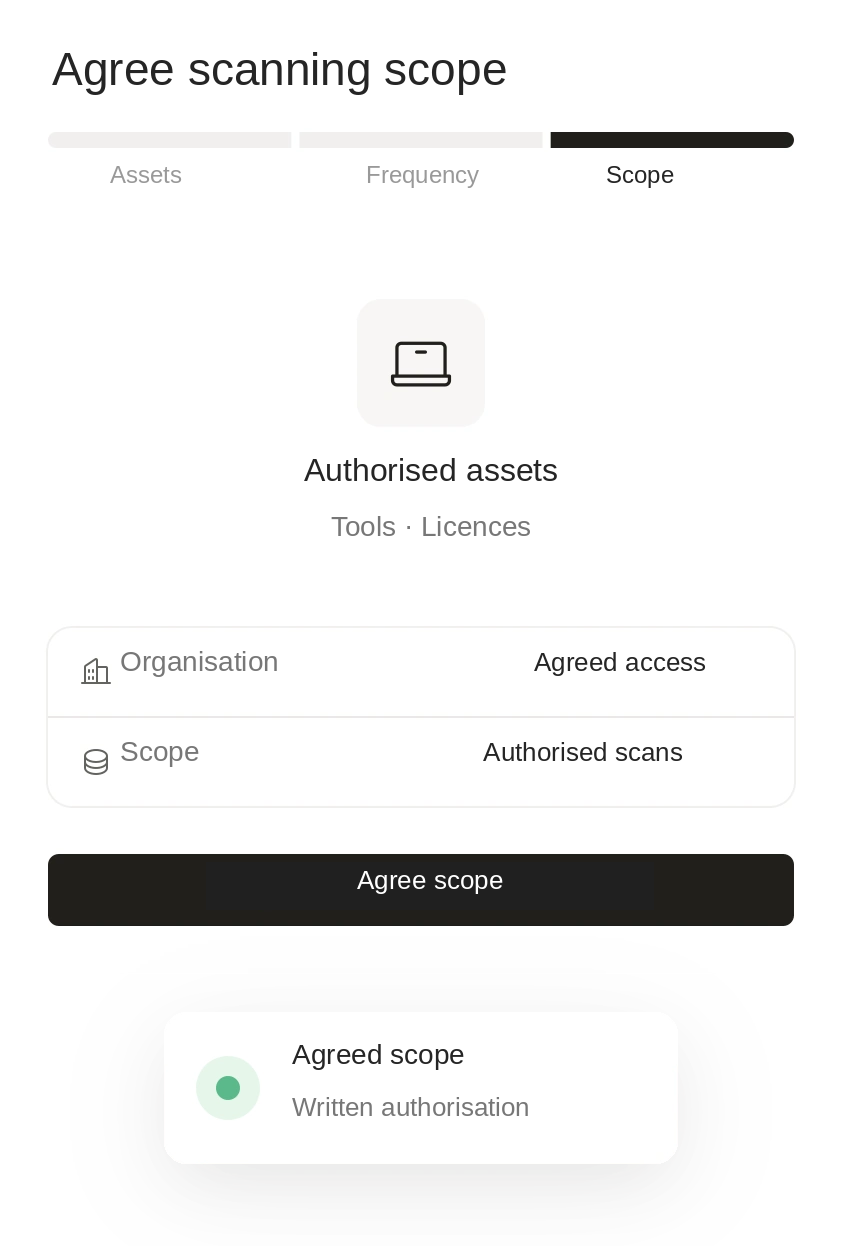
Identify authorised assets, tools, frequency and relevant licences.
Recurring scans and the register are a separate project for Assessments and optional for Managed Cybersecurity and Monitoring & Response. ASM depends on agreed assets, sources and licences.
On working with the ZebraByte team.
“I described the experience with ZebraByte as excellent in terms of service.”
Featured brands





No. Vulnerability management tracks recurring discovery and remediation; penetration testing is a separate specialist engagement.
Frequency, scope and authorised access are agreed in the proposal.
Not in Assessments. It is optional for the other two services and depends on assets, sources and licences.
No. Remediation tracking does not mean automatic code fixes or patching unmanaged systems.
Assets, permitted access, tools and frequency are agreed before activation. We do not scan systems outside authorised scope.
Attack Surface Management tracks the public exposure of agreed assets. Coverage depends on available sources and licences; it does not replace internal scanning or penetration testing.
The register helps organise findings by risk and context so remediation actions can be tracked within contracted scope.
Recurring scans and the register are a separate project for Security Assessments and optional for Managed Cybersecurity and Security Monitoring & Response. Remediation tracking within contracted scope is included in Managed Cybersecurity.
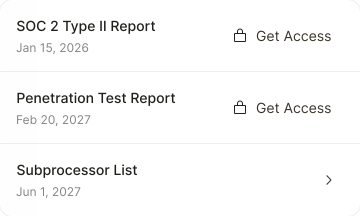
Share security documents securely
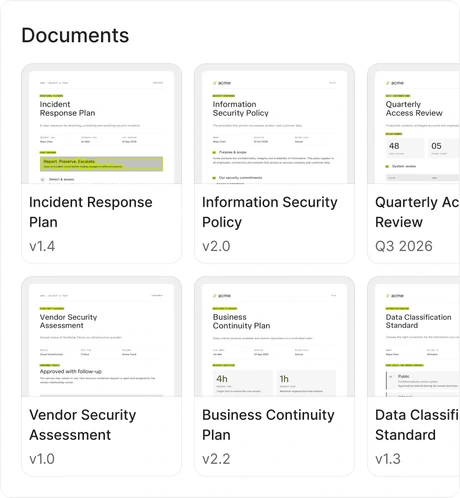
Draft, approve, and sign your policies
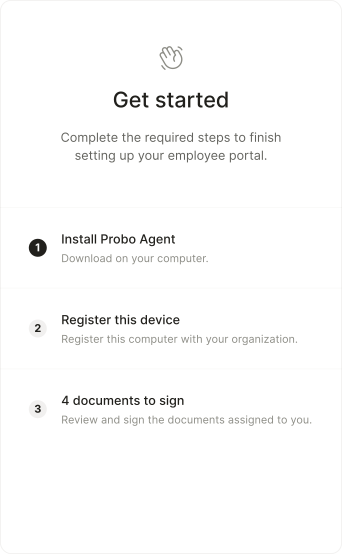
Your whole team’s compliance, in one portal
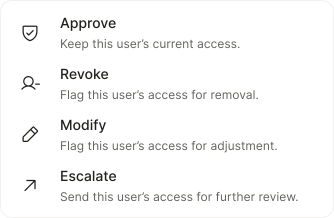
Monitor user access across all your systems
Run compliance from the tools you use
Consent that follows every visitor's law

Monitor device security posture continuously