Penetration Testing

Specialist testing for web applications, APIs and infrastructure, with authorisation, rules of engagement and reporting.

Penetration Testing

Authorised testing scope and methodology.

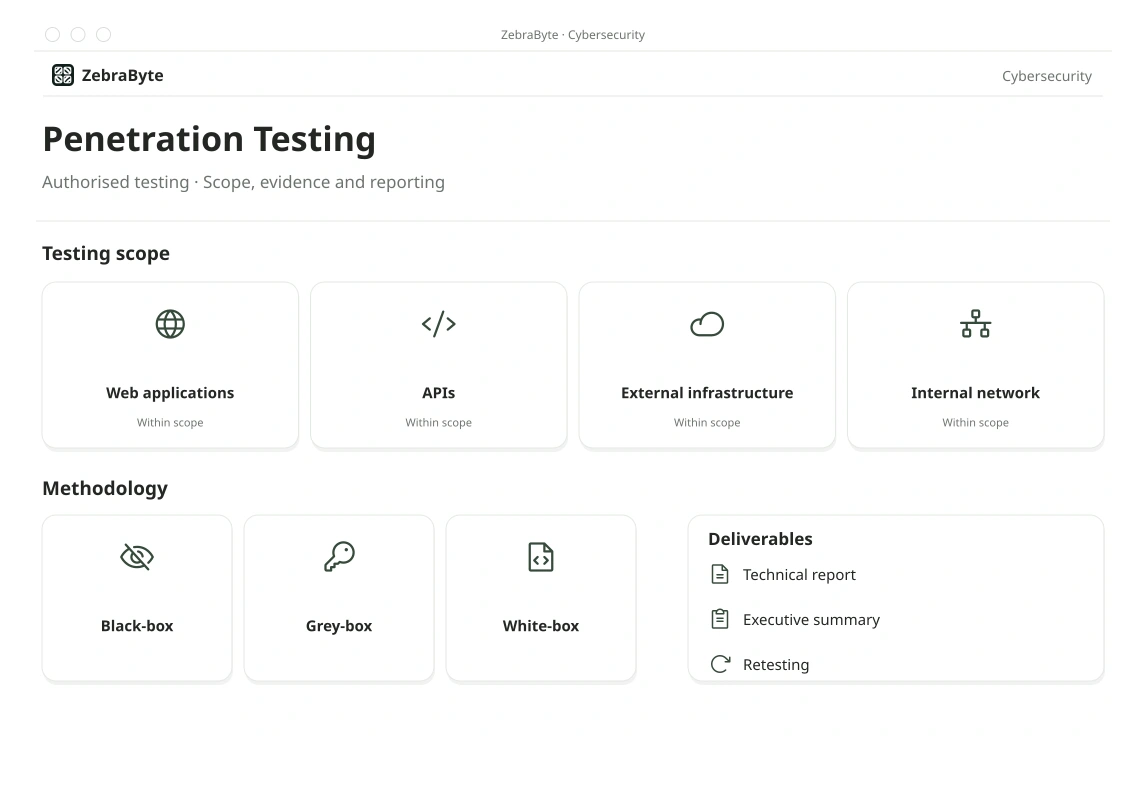
A penetration test assesses authorised assets within a defined window. Scope, access, methodology and deliverables are agreed before the engagement so results can support remediation decisions.

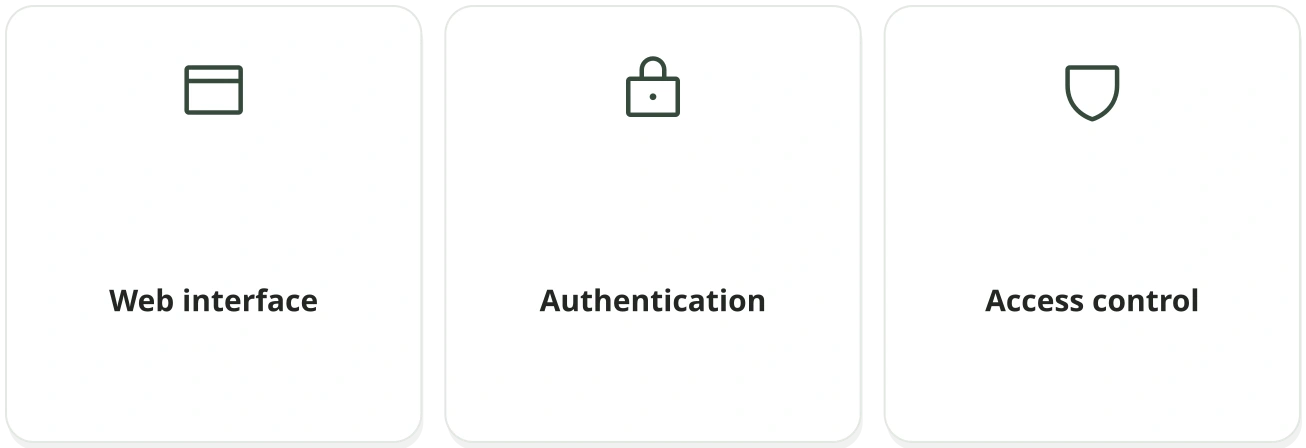
Web applications

Web application review covers authentication, access control and functional security behaviour within authorised scope.

APIs

Review API interfaces and how access to resources and operations is controlled within authorised boundaries.

Infrastructure

External infrastructure and internal network testing are separate engagements with access, specialist and methodology confirmed before acceptance.

Tailored methodology

The level of information and access is defined by black-box, grey-box or white-box methodology according to engagement objectives.

Reporting and retesting

Technical reporting and an executive summary support impact assessment and remediation priorities. Retesting is agreed in the proposal.

From authorisation to reporting and retesting

From scope definition to reporting and retesting, each stage focuses on validating findings and communicating impact clearly without unilaterally expanding access.

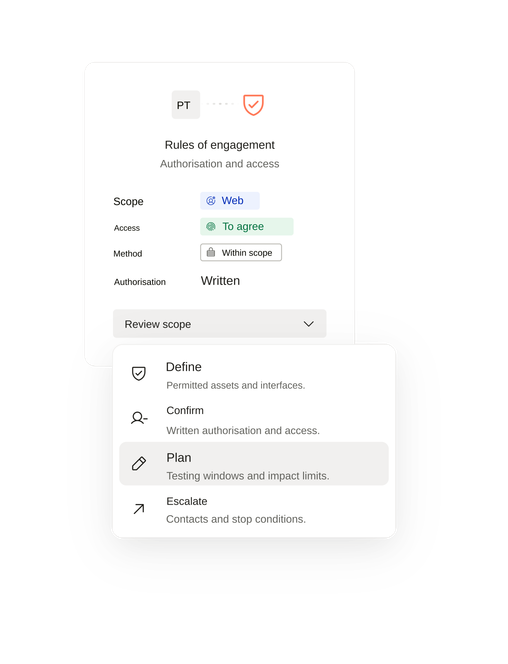
Authorisation and rules of engagement

  • Define objectives, permitted assets and interfaces. Scope may cover web applications, APIs and infrastructure according to the proposal.
  • Confirm written authorisation, test accounts and impact limits before any activity.
  • Agree testing windows, escalation contacts and stop conditions.

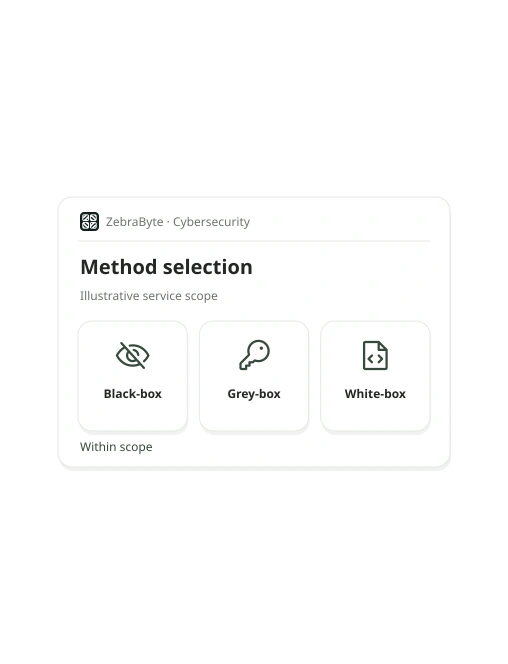
Method selection

  • For web applications, OWASP WSTG provides a reference for structuring security checks.
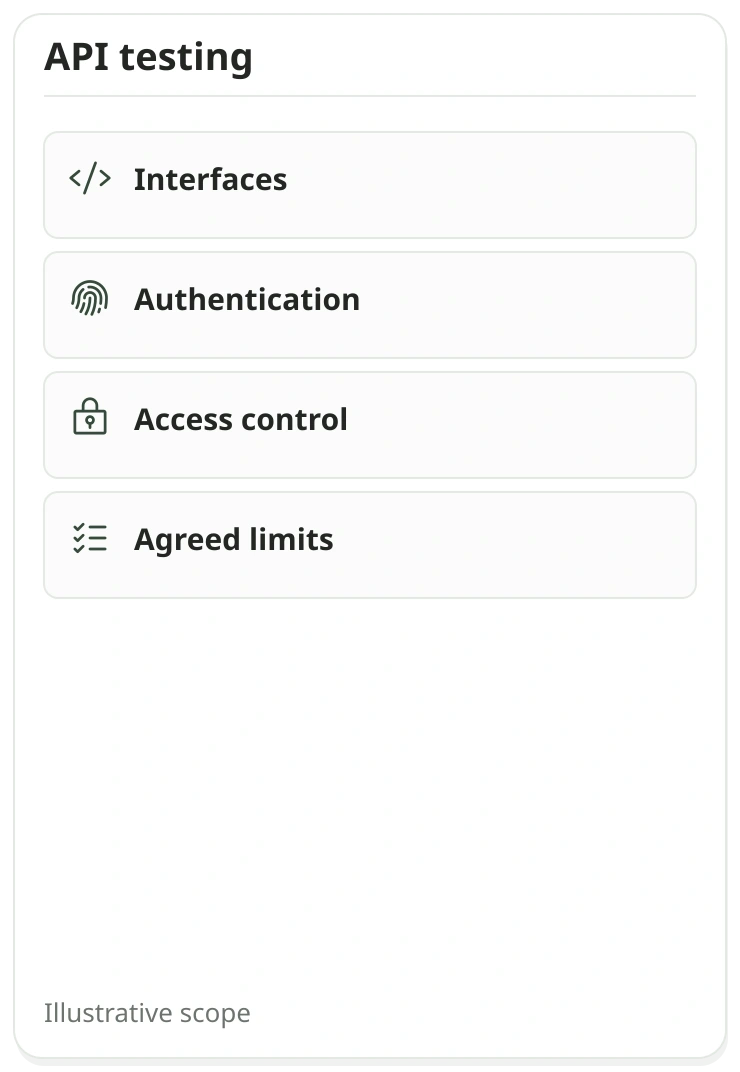
  • For APIs, methodology covers interfaces, authentication and authorised access boundaries.
  • Select black-box, grey-box or white-box according to access, objectives and specialist availability.

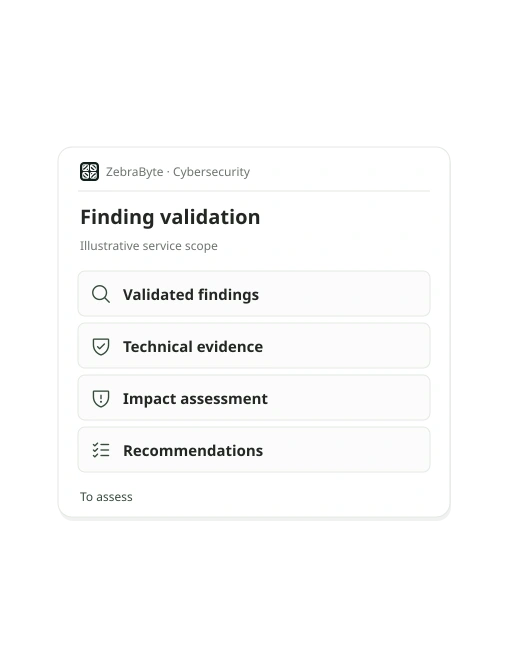
Finding validation

  • Validate findings within agreed limits to distinguish confirmed results from potential issues.
  • Document evidence and impact on in-scope assets without unilaterally expanding the engagement.
  • Results reflect methodology, access and testing window; not every vulnerability can be guaranteed to be identified.

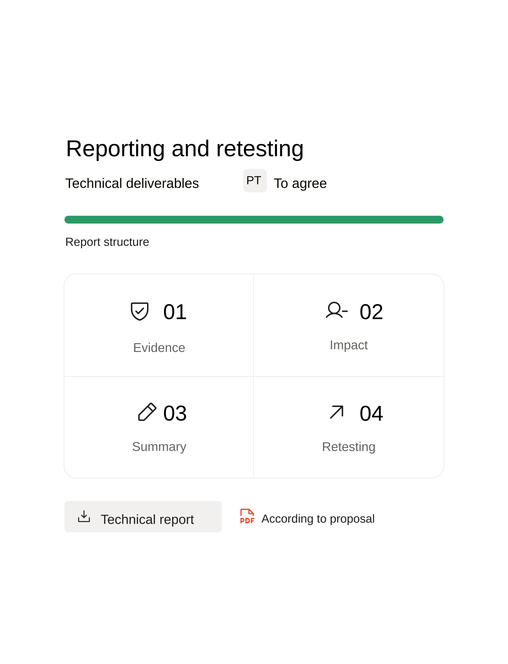
Reporting and retesting

  • The technical report describes findings, impact and relevant remediation recommendations.
  • The executive summary presents risks for those responsible for prioritising actions.
  • Retest scope, number and timing are agreed in the proposal; implementation of fixes is not automatically included.

What testing can cover

We select scope according to assets and objectives. All penetration test types are separate engagements quoted after delivery capability is confirmed, not automatically included cybersecurity subscription benefits.

Web application penetration testing (OWASP WSTG)

Web applications are assessed against engagement objectives, using OWASP WSTG as a reference. Checks may cover authentication, access control, sessions and data validation exclusively within authorised scope.

API penetration testing

We assess approved API interfaces and how they handle identities, resource access and permitted operations. Validated findings, impact and access limitations are documented in the report.

External infrastructure penetration testing

We assess external assets and public services included in the engagement, not the organisation’s entire infrastructure by default. Addresses, domains, windows and testing boundaries are confirmed before work starts.

Internal network penetration testing

Internal network testing requires authorised access to defined segments and confirmation of specialist availability. Objectives, connection conditions and operational restrictions are agreed before quoting.

Black-box / grey-box / white-box testing

Black-box uses limited information, grey-box starts from agreed access and information, and white-box may include authorised documentation and source code. The choice depends on assessment objectives.

Penetration test technical report, evidence and executive summary

The technical report documents validated findings, evidence, impact and recommendations. The executive summary supports decision-maker prioritisation; retest scope, number and timing are agreed in the proposal.

What our customers say

On working with the ZebraByte team.

“I worked very well with the ZebraByte team. My requests were addressed quickly and professionally. Highly recommended.”
Bănuță Cristina
Google

Featured brands

Lashify Lollipop Play Nutrimo jobiago VitaCup

Frequently asked questions

No. It is a separate project for Security Assessments or Managed Cybersecurity, subject to delivery capability validation.

Specialist availability, access and methodology are confirmed before accepting the engagement.

Written authorisation, assets and testing limits agreed before commencement.

Yes, within the contracted project. It includes a technical report, evidence and executive summary.

No. Scope and number are agreed in the proposal.

We do not guarantee finding every vulnerability. Results reflect scope, method, access and testing window.

Scanning identifies potential vulnerabilities; penetration testing manually validates findings and impact within an authorised engagement. They are distinct services.

Agree permitted assets, methodology, testing windows, escalation contacts and stop conditions. Access and specialist capacity must be confirmed.

Black-box starts with limited information, grey-box uses agreed access, and white-box may include documentation and source code where authorised. The method is selected according to objectives and engagement scope.

Testing windows, impact limits, contacts and stop conditions are agreed in advance. Testing cannot guarantee zero impact; permitted methods are defined in the rules of engagement.

Validated findings, relevant evidence, impact and remediation recommendations are documented within scope. The executive summary explains implications for decision-makers.

Retesting may verify whether identified issues have been addressed. Scope, number and timing are defined in the proposal; a retest is not a guarantee of complete security.

Discover more ZebraByte products